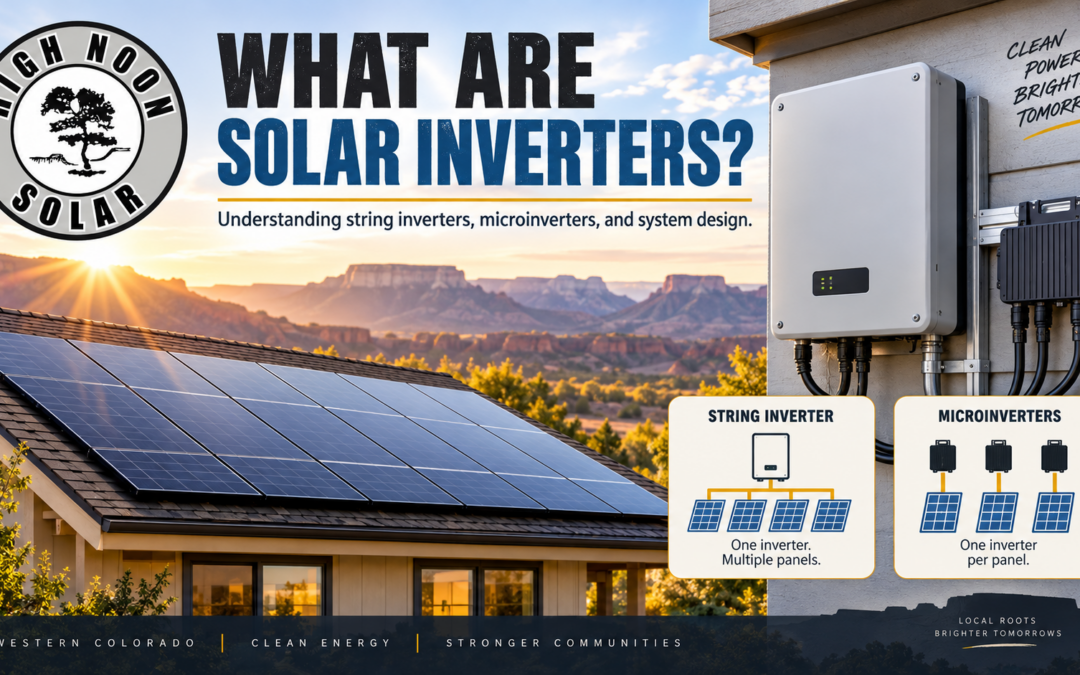
With a string inverter system, multiple solar panels are connected together and their DC power is sent to an inverter, where it is converted to AC.
String inverters can be a simple and cost-effective option, particularly on arrays with consistent orientation and limited shading.
Some string-inverter systems also use power optimizers at each panel. Optimizers allow individual panels to be managed at the module level while a separate inverter still performs the DC-to-AC conversion.
Microinverters
Microinverters perform the DC-to-AC conversion at the solar panels rather than at one central location.
Because panels can operate more independently, microinverters can be useful on roofs with shading, multiple roof directions, or other conditions where individual panels may produce different amounts of power. They can also provide panel-level monitoring.
Which Type of Inverter Is Better?
There isn’t one inverter design that is best for every solar project.
The right choice depends on factors such as:
- Roof or ground-mount layout
- Shading
- System size
- Battery-storage plans
- Monitoring needs
- Equipment compatibility
- Cost
- Serviceability
- The goals of the property owner
A properly designed system considers the inverter together with the solar panels, electrical service, utility requirements, and any battery-storage equipment.
More Than Just Power Conversion
Today’s inverters can do much more than convert electricity. Depending on the equipment, they may monitor system performance, communicate with the utility grid, manage batteries, provide backup-power functions, and respond to changes in grid voltage or frequency.
That makes the inverter an important part of both the performance and functionality of a modern solar system.
If you’re considering solar or adding equipment to an existing system, our Energy Consultants can help determine what equipment makes sense for your property.